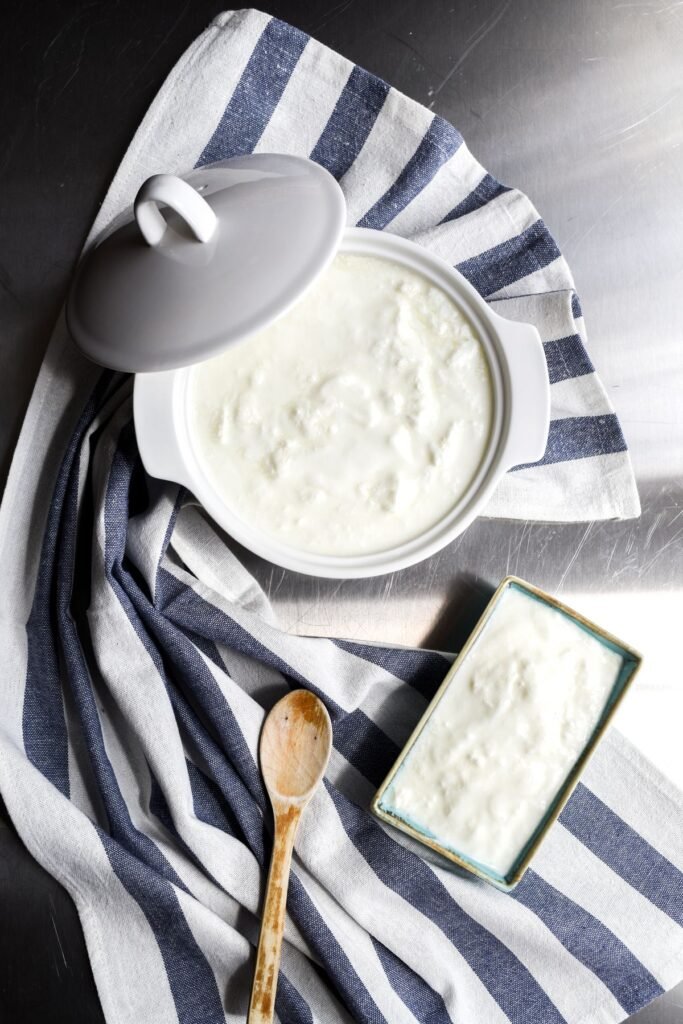
Kefir is a fermented milk drink produced by a symbiotic culture of bacteria and yeasts (the kefir “grains”) rather than the pure bacterial cultures used to make yoghurt. The result contains a wider range of probiotic strains than yoghurt, has a thinner consistency, a pleasantly tart flavour, and a slight natural effervescence from the yeast activity. Making it at home requires kefir grains (available from health food stores, online, or from someone who already makes kefir and has spare grains), whole milk, and a glass jar. That’s everything.
Getting Kefir Grains
Kefir grains are not actually grains – they’re clusters of proteins, polysaccharides, bacteria and yeast that look a bit like small cauliflower florets or cottage cheese curds. They’re living organisms that grow and multiply as you use them. The grains need to be “activated” if they’ve been stored dried or frozen – add them to a small amount of milk for 24-48 hours, discard the first batch of kefir, and repeat until they become actively fermenting (the milk thickens and has a sour aroma). Healthy active grains smell pleasant and sour, like a mild yoghurt or natural sourdough – not unpleasant.
The Basic Process
Place 1-2 tablespoons of kefir grains in a clean glass jar. Add 500ml whole milk (full-fat, ideally not UHT). Stir briefly, cover with a breathable cloth (a piece of muslin, cheesecloth, or a coffee filter secured with a rubber band – not an airtight lid, as the fermentation produces CO2), and leave at room temperature for 24-48 hours. The warmer your kitchen, the faster the fermentation – 24 hours in a warm kitchen, up to 48 in a cooler one.
When ready, the kefir will be slightly thickened with a sour aroma. Strain through a plastic or wooden sieve (metal can damage the grains over time) to separate the grains from the kefir. The finished kefir goes into a glass bottle or jar and is refrigerated. The grains go back into a clean jar with fresh milk to start the next batch.
What to Do with Kefir
Drink it straight – many people do, and the flavour is an acquired taste that most find pleasant within a few weeks. Use it in smoothies in place of milk or yoghurt. Make kefir pancakes (identical to the yoghurt pancakes recipe, just substituting kefir for yoghurt). Use as a marinade for chicken or meat in the same way as yoghurt. Make kefir salad dressing with herbs, garlic, and lemon. Freeze into kefir ice blocks for a probiotic treat.
Caring for Your Grains
Healthy grains grow over time – after a few weeks you’ll have more than you need for a single batch. Use the extras for a second jar, give them to someone who wants to start, or blend them into a smoothie. They’re not wasted. If you need to take a break from making kefir, store the grains submerged in milk in a covered jar in the fridge – they’ll slow down significantly in the cold and can be stored this way for up to two weeks. Change the milk every week to keep them alive.
Kefir grain fermentation is one of the most ancient food technologies in existence – cultures across the Caucasus and Central Asia have been making kefir for thousands of years. The grains themselves are passed between families and communities and can be maintained indefinitely with proper care. Starting a kefir habit means you’re taking on a small living culture that, with a few minutes of attention every couple of days, will produce an endless supply of one of the most nutritionally dense fermented foods available.
Second Fermentation: For Fizz and Flavour
The kefir you strain off the grains is ready to drink, but a second ferment makes it more interesting. Pour the strained kefir into a bottle with a lid, add a little fruit, citrus peel, or a spoon of honey, seal it, and leave it on the bench for another 12 to 24 hours. The yeasts keep working on the new sugars and build up carbon dioxide, giving you a fizzier, fruitier drink. Open it carefully over a sink, as a lively second ferment can build real pressure. Strain out the fruit and chill before drinking.
Knowing When It’s Ready
Kefir is done when it has thickened slightly and smells pleasantly sour, a little like natural yoghurt with a yeasty edge. In a warm kitchen this can take as little as 18 hours. In a cool one it can stretch past 36. If you leave it too long it separates into white curds and a clear, yellowish whey, and the flavour turns sharp and very tart. Separated kefir is still safe to drink and can be whisked back together, but it is a sign to strain a little earlier next time.
Troubleshooting
The grains aren’t multiplying. Slow growth usually means the milk is too cold, the grains are still recovering from storage, or they are being starved. Keep them somewhere warmish, give them fresh full cream milk every batch, and be patient. Grains revived from dried or frozen can take a couple of weeks to hit their stride.
My kefir is too sour or too thin. Both come down to ferment time and temperature. Sour and thick means it went too long, so strain earlier. Thin and barely soured means it needs more time or a warmer spot. Adjust by a few hours at a time until you find the window that suits your kitchen.
The grains have turned to mush. Healthy grains are firm and slightly rubbery. If they go soft and slimy, they may have been knocked about by metal utensils, chlorine in tap water, or too much heat. Switch to a plastic or wooden sieve, rinse only with filtered or rested water if you rinse at all, and keep them out of direct heat.
Common Questions
Does kefir contain alcohol? A trace, yes. The yeast activity produces a very small amount of alcohol, usually well under one percent, similar to a ripe banana or a juice that has sat out. A longer or sealed second ferment lifts it slightly. For almost everyone this is negligible.
Is kefir suitable if I’m sensitive to lactose? Many people who struggle with milk tolerate kefir better, because the cultures consume much of the lactose during fermentation, and the longer it ferments the less remains. This is general guidance rather than medical advice, so go gently if you are unsure.
Can I use UHT or plant milk? The grains do best on fresh full cream dairy. They will limp along on UHT but tend to weaken over time. Plant milks hold no lactose for the grains to feed on, so the grains cannot live in them long term. You can make the odd batch of plant kefir by moving the grains across for a single ferment, then returning them to dairy to recover.
How much should I drink? Start small, a quarter of a cup a day, and build up as your gut adjusts. Going hard from day one can leave you bloated. There is no need to drink large amounts to get the benefit.