Yoghurt flatbreads are one of those recipes that seems too simple to be real until you make them. Two ingredients – plain yoghurt and self-raising flour – mixed together and cooked in a dry pan produce soft, pliable flatbreads that are better than many commercially made versions and take about 15 minutes from start to finish. They’re not identical to yeasted flatbreads, but they’re genuinely good and require no planning ahead.
The Basic Recipe
Combine 1 cup self-raising flour with 1 cup plain yoghurt (full-fat or low-fat both work here) and a pinch of salt. Mix with a fork until it comes together into a rough dough, then turn out and knead for 1-2 minutes until smooth. The dough should be soft and slightly tacky – if it’s too sticky, add a tablespoon of flour at a time until you can handle it without it sticking to your hands.
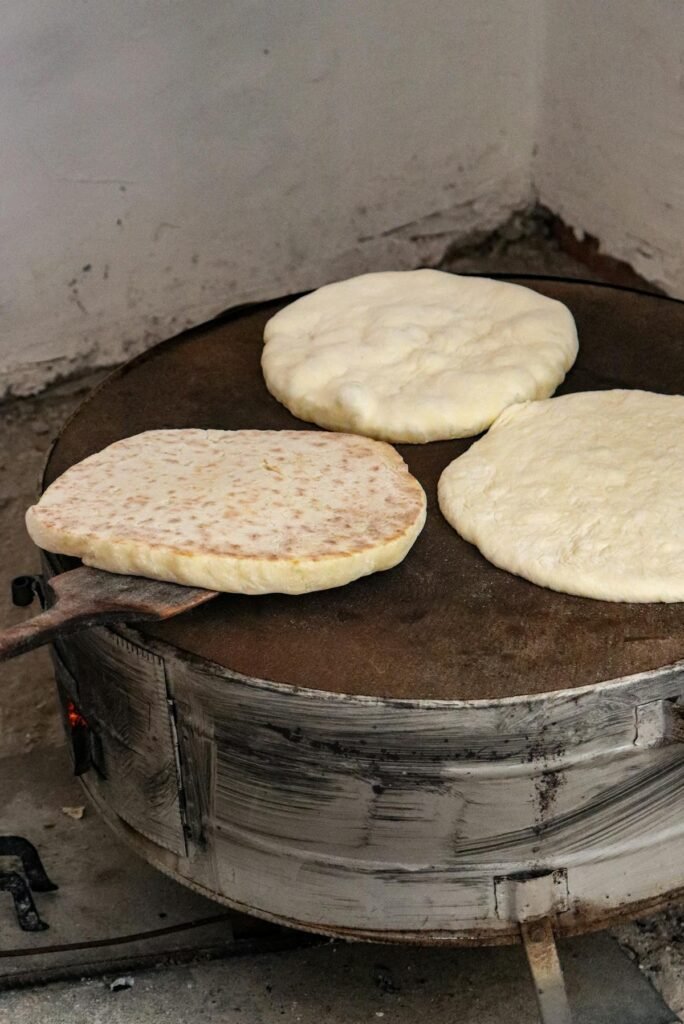
Divide into 4-6 pieces depending on how large you want your flatbreads. Roll each piece on a lightly floured surface to about 3-4mm thickness – thicker than a crepe, thinner than a scone. Cook in a dry (no oil) non-stick pan or cast-iron skillet over medium-high heat for 2 minutes per side, until charred spots appear and the flatbread puffs in places. This charring is important – it adds flavour and the characteristic appearance of a proper flatbread.
Flavour Additions
Herb flatbreads: add a tablespoon of finely chopped fresh herbs (rosemary, thyme, or parsley) to the dough. Garlic flatbreads: brush with garlic butter immediately after cooking. Za’atar flatbreads: press za’atar spice mix into the surface before rolling, then cook as usual. Sesame flatbreads: sprinkle sesame seeds onto the rolled dough and press lightly to adhere before cooking. All of these take under a minute of extra preparation and meaningfully change what the flatbreads work with.
What to Serve Them With
The most natural pairing is the rest of this site’s yoghurt-based recipes: tzatziki, labneh, or hummus. But yoghurt flatbreads also work well alongside: grilled halloumi and tomato salad, soup (particularly lentil or chickpea soup), scrambled eggs and herbs for breakfast, or as a wrap for grilled chicken with salad. They’re soft enough to roll without cracking, which makes them more useful as wraps than many store-bought flatbreads.
Eat them warm or at room temperature on the day they’re made. They don’t reheat well (they become dry) and aren’t worth storing. The speed of the recipe means there’s little point making them ahead – 15 minutes before a meal is all that’s needed.
Why They Work
The lactic acid in yoghurt reacts with the bicarbonate of soda in self-raising flour to create carbon dioxide, which causes the flatbread to puff and creates a lighter texture than you’d get from flour and water alone. The fat and protein in yoghurt also contribute to a softer, more pliable texture that holds up well without being tough. It’s genuinely one of the more elegant applications of yoghurt in baking.
No Self-Raising Flour? Make Your Own
If you only have plain flour, make self-raising flour by whisking two teaspoons of baking powder through each cup of plain flour before you start. It is the raising agent reacting with the yoghurt that gives these flatbreads their lift, so this step matters. For a wholemeal version, replace up to half the flour with wholemeal and expect a denser, nuttier bread.
Troubleshooting
The dough is too sticky to handle. Yoghurts vary in thickness, so a runnier one needs a little more flour. Add it a tablespoon at a time until the dough is soft and just tacky rather than wet.
They came out tough or dry. Usually too much flour or too much kneading. Knead just until smooth, a minute or two, and roll them a touch thicker.
They aren’t puffing or charring. The pan is not hot enough. Get it properly hot before the first flatbread goes in, and do not oil it. You want a dry, hot surface so they blister.
Common Questions
Can I make the dough ahead? It is best cooked fresh, but the dough will sit covered in the fridge for a few hours. Let it come back to room temperature before rolling. Cooked flatbreads go dry quickly, so cook them just before you eat.
Can I freeze them? They freeze better than they keep in the fridge. Cool them fully, layer with baking paper, and freeze. Warm straight from frozen in a hot dry pan.
Which yoghurt is best? Plain full-fat or Greek yoghurt gives the softest, most pliable bread. A thicker yoghurt makes a slightly sturdier flatbread that is better for wraps.