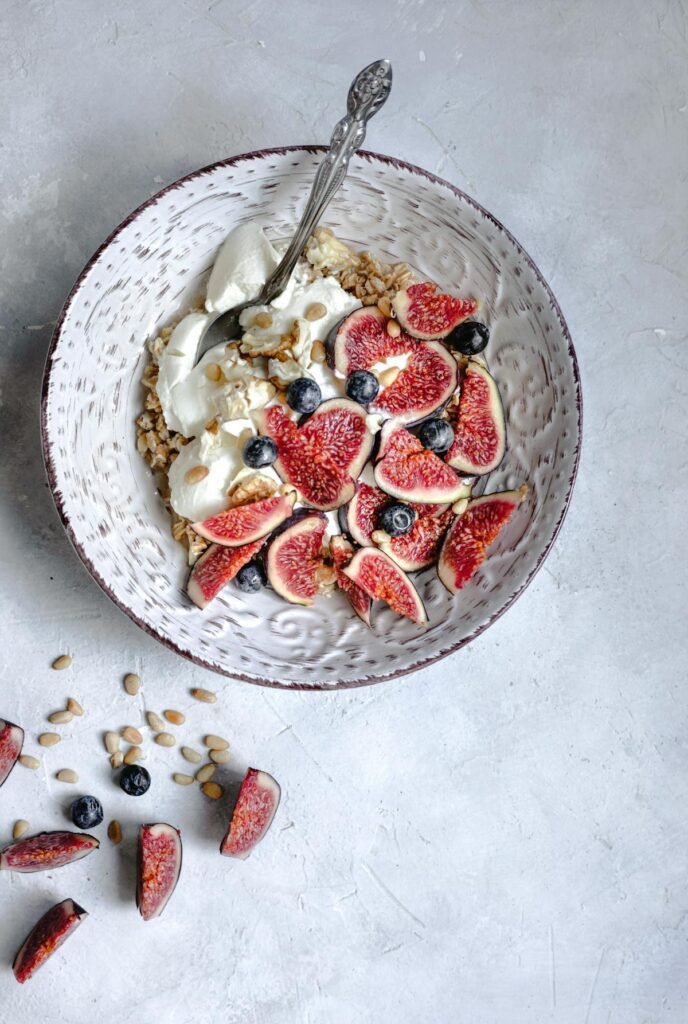
Skyr is one of the most misunderstood dairy products available. In supermarkets outside Iceland, it’s marketed and shelved as yoghurt, and it behaves enough like thick yoghurt that most people treat it as such. But technically, skyr is a fresh soft cheese – it’s produced by adding rennet to warm cultured milk, which causes it to set differently from yoghurt and produces a product with a higher protein content, a denser texture, and a milder, less acidic flavour than Greek yoghurt. It’s been part of Icelandic food culture for over a thousand years, and the domestic version is significantly different in quality from the commercial product exported globally.
How Skyr Differs from Yoghurt
Yoghurt is produced by bacterial fermentation alone – specific bacteria consume the lactose in milk and produce lactic acid, which causes the proteins to coagulate. Skyr uses bacterial fermentation plus a small amount of rennet, the enzyme that causes milk proteins to clump together in cheesemaking. This combination produces a firmer, smoother curd that, after straining, achieves a protein content of around 10-11g per 100g – roughly double that of standard yoghurt. The whey that drains off during straining is reincorporated in commercial production (to reduce waste and add volume), but traditional skyr discards it entirely, which is why artisan skyr is thicker and richer than commercial varieties.
Making Skyr at Home
You’ll need: 2 litres of skim or low-fat milk (skyr is traditionally made from skimmed milk – this is not about calorie reduction but about the specific protein structure that results), 3 tablespoons of commercial skyr or plain yoghurt as starter, and 1 drop of liquid rennet (available from cheesemaking suppliers or online).
Heat the milk to 90°C, hold for 5 minutes, then cool to 38-40°C. Whisk in the starter. Dissolve the rennet in a tablespoon of cold water and stir gently into the milk. Cover and keep warm (same method as yoghurt – wrapped in towels, oven with light on, or similar) for 8-12 hours. The milk should set into a firm, yoghurt-like curd. Strain through cheesecloth for 4-8 hours in the fridge, discarding the whey (or saving for other uses). The result should be thick, smooth, and almost spreadable.
How Icelanders Eat It
Traditionally, skyr is eaten with a spoonful of cream stirred through and fresh blueberries on top – the cream adds fat that the skim milk base lacks, and the blueberries are the most traditional accompaniment in Iceland. It’s also eaten with brown sugar stirred through, with jam, with granola, or straight from the container with a spoon. The Icelandic version has a specific mild, clean flavour without the sharpness of Greek yoghurt, and the texture is dense enough to be scooped rather than poured.
Skyr is worth making at home if you have an interest in fermentation – it’s a straightforward introduction to basic cheesemaking techniques and produces something noticeably different from anything available commercially. Once you’ve made it, it’s difficult to go back to the commercial version as a substitute.
Choosing Milk and Rennet
Traditional skyr is made from skim or low-fat milk, and it is worth sticking to that. It is not about cutting calories, it is about the protein. Skim milk gives skyr its dense, firm curd and clean flavour, where full cream milk makes a softer, richer set closer to labneh. Fresh pasteurised milk gives the cleanest result. Steer clear of ultra-filtered or lactose-free milk while you are learning, as the altered proteins set unpredictably.
The rennet is the part most people are unsure about. You only need a single drop, diluted in cold water, and a small bottle from a cheesemaking supplier will last you years. Vegetarian (microbial) rennet works just as well here as animal rennet, so look for that if it matters to you. If you genuinely cannot get rennet, you can still make a skyr-style strained yoghurt without it. It sets through the culture alone and comes out a little softer and tangier.
Troubleshooting
The curd stayed soft or soupy. Either the milk was too cool when it set, or the rennet was old or over-diluted. Keep it in the 38 to 40 degree range for the full ferment, and use fresh rennet. A soft curd will still strain into something usable, it just takes longer.
It came out too sour. Skyr should be mild, milder than Greek yoghurt. Sourness means it fermented too long. Pull it out to strain a little earlier next time, closer to the 8 hour mark than 12.
It’s grainy. Grainy skyr usually means the milk was heated too fast or too hot as the curd formed. Heat gently, hold steady, and stir the rennet in softly rather than beating it.
It’s drier than I wanted. You have strained it too long. Stir a little of the reserved whey or a splash of milk back through to loosen it to the texture you like.
Common Questions
Is skyr a yoghurt or a cheese? Technically a fresh cheese, because of the rennet, but it is eaten and sold like a thick yoghurt. Both descriptions are fair.
How is it different from Greek yoghurt? Skyr is strained further and made with rennet, so it is denser, higher in protein, and milder. Greek yoghurt is strained yoghurt with no rennet and a sharper tang.
How long does it keep? In a sealed container in the fridge, homemade skyr keeps for about a week. Like yoghurt, the flavour sharpens over time.
What do I do with the whey? Do not tip it down the sink. It is full of protein and works in bread dough, smoothies, or soaking grains, and it keeps for a week in the fridge.