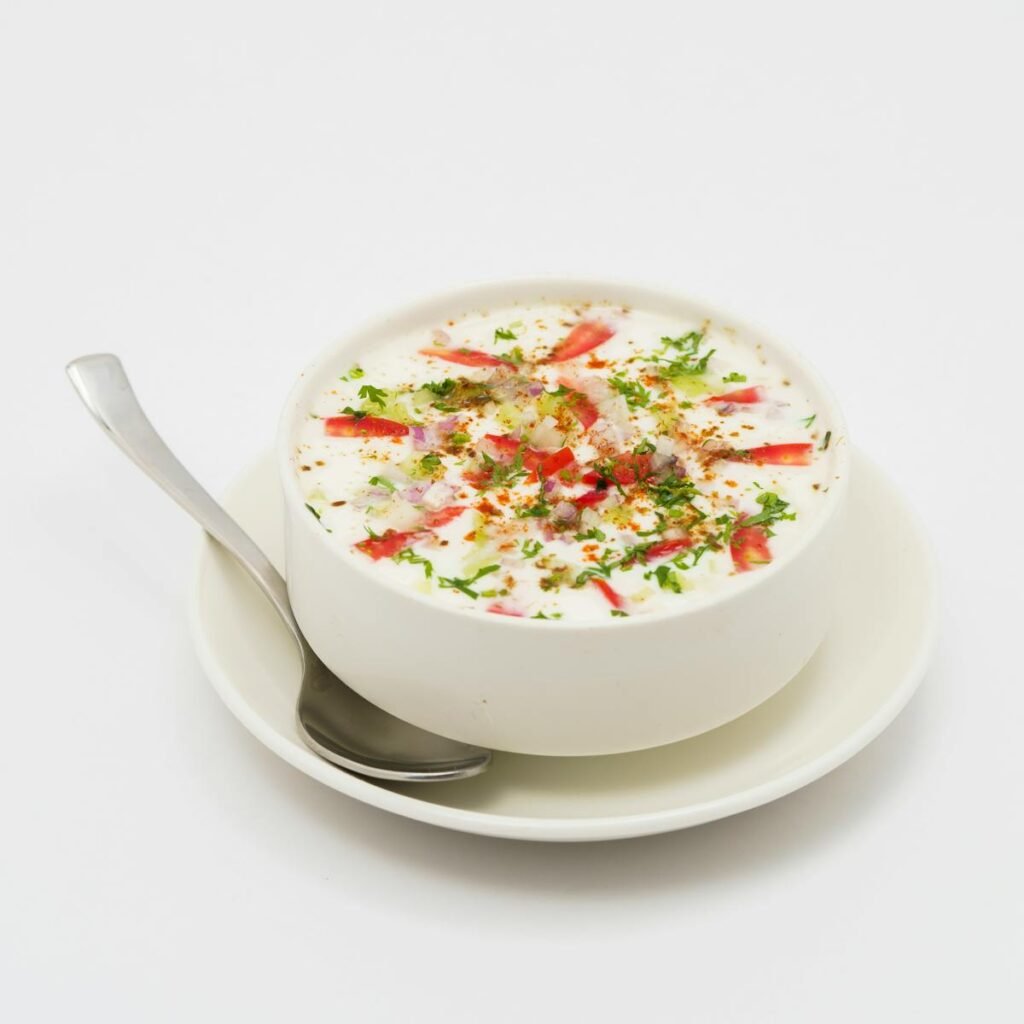
Raita is one of the most useful condiments you can keep in the fridge. It cools and tempers spiced food, provides a creamy contrast to grilled meat, and works as a dip, sauce, or side dish depending on what you need from it. It takes five minutes to make, is built entirely from ingredients most people have on hand, and improves almost any meal that involves Indian-spiced food. It’s also almost infinitely variable – there are hundreds of regional versions across India, each adapted to local produce and taste preferences.
The Base
All raitas start with plain full-fat yoghurt, thinned slightly with water or milk to a pourable consistency (about 3 parts yoghurt to 1 part liquid). Season with salt and a small pinch of roasted cumin – cumin toasted in a dry pan and ground is far more aromatic than pre-ground powder and makes a noticeable difference to the finished dish. A pinch of chaat masala (available from Indian grocery stores) adds a tangy, slightly fruity note that is characteristic of many northern Indian raitas.
Cucumber Raita
The most common version. Grate or finely dice one cucumber and squeeze out excess moisture. Stir into the yoghurt base with fresh mint, a pinch of cumin, and salt. Some versions add green chilli – a small amount finely minced adds heat without dominating. This raita is the standard pairing for biryani and works alongside anything spiced with garam masala or chilli.
Boondi Raita
Boondi are tiny fried chickpea flour balls available from Indian grocery stores. Soak a handful in water for a few minutes to soften slightly, then stir into the yoghurt base with cumin and coriander. The boondi absorb the yoghurt as they sit and develop a texture somewhere between a crouton and a dumpling – soft on the inside, slightly chewy on the outside. This version is particularly good with rice dishes and is different enough from cucumber raita to justify having both in rotation.
Roasted Tomato and Cumin Raita
Halve 4 small tomatoes and roast at 200°C until soft and slightly charred (about 20 minutes). Cool and roughly chop. Stir into the yoghurt base with roasted cumin, a pinch of smoked paprika, and fresh coriander. The roasting concentrates the tomato flavour and adds a depth that raw tomato raita lacks. Good alongside grilled chicken or lamb, or as a dip for flatbread.
Mint and Pomegranate Raita
Blend a large handful of fresh mint with a tablespoon of water to make a rough mint paste. Stir into the yoghurt base and season with salt, cumin, and lemon juice. Top with pomegranate seeds. This version is bright green, tart, and visually striking – the pomegranate adds sweetness and texture that contrasts with the herby yoghurt. Excellent alongside lamb dishes or as part of a mezze-style spread.
All four versions keep in the fridge for up to three days, though the cucumber version releases water as it sits – drain and stir before serving. Raita is best served cold, straight from the fridge.
Getting the Base Right
A good raita starts with a good yoghurt. Use plain full cream yoghurt for a base that carries the spices, and whisk it smooth before you thin it, so there are no lumps. Thin it gradually with water or milk until it pours but still coats a spoon. Season in stages, tasting as you go, because the salt and cumin need to be balanced against the tartness of the yoghurt rather than dumped in at once.
Troubleshooting
It’s too thin or too thick. Raita is easy to correct. Too thick, loosen it with a splash more water or milk. Too thin, stir through a spoon of thick yoghurt to bring back the body. Watery add-ins like cucumber and tomato will loosen it further as it sits, so account for that.
It’s too sour. A very tart yoghurt can overwhelm the other flavours. A small pinch of sugar settles the sharpness without making the raita sweet, and a little extra salt rounds it out.
It splits or weeps. Yoghurt releases water as it stands, especially once cucumber or tomato are stirred in. This is normal. Drain off any pooled liquid and stir before serving, and add watery vegetables close to serving rather than hours ahead.
Serving and Storage
Raita is meant to be eaten cold, straight from the fridge, where its job is to cool and balance a spiced meal. Serve it alongside biryani, curries, grilled meats, or spiced flatbreads, or set it out as a dip in a mezze-style spread. The four versions above all keep for up to three days, though the cucumber raita is best made the day you plan to eat it, since it waters down fastest.