Mediterranean food culture is one of the most imitated in the world and one of the most frequently misrepresented in tourist destinations. The restaurants that line seafront promenades and cluster around major archaeological sites serve a version of Mediterranean food designed to appeal to the broadest possible audience, which usually means it’s blander, more expensive, and less interesting than what locals actually eat. Here’s how to find the real thing.
Walk Away from the Main Tourist Areas
The single most effective thing you can do to eat better in a Mediterranean destination is to walk fifteen to twenty minutes from the main tourist areas and find where locals eat. In most Mediterranean cities, there’s a sharp quality difference between the restaurants that depend primarily on tourist trade and those that serve a regular local clientele. The latter are generally cheaper, more consistent, and more representative of what the cuisine actually tastes like.
This is as true in southern France as it is in Croatia, Greece, or Turkey. Tourist-facing restaurants in Mediterranean destinations know that most of their customers will never return, which creates very little incentive to maintain quality. Local restaurants know they’re competing for regular customers, which creates the opposite incentive.
Finding Good Yoghurt and Dairy
Fresh dairy products in Mediterranean countries are generally sold at local supermarkets, small delicatessens (the Greek equivalent is a παντοπωλείο, pronounced pandopoleio), and at morning markets. The yoghurt sold in tourist supermarkets is often a commercial product; the yoghurt sold at a small local market or a producer’s stall is something else entirely.
In Greece, look for pots of yoghurt with cream on top (full-fat sheep’s milk yoghurt) at local bakeries and small food shops. In Turkey, find a local market and look for yoghurt sold in clay or plastic containers that are clearly from a small producer. In Lebanon, the white cheese and labneh sold at butcher shops and small neighbourhood groceries is often made locally and is far better than the supermarket alternatives.
The Morning Market Routine
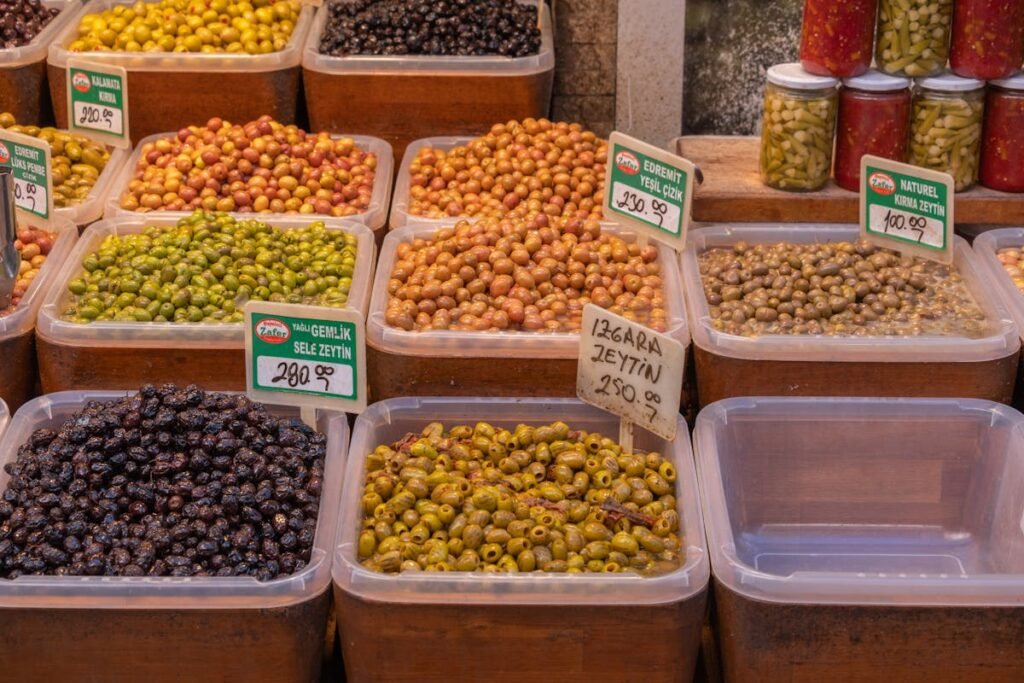
In most Mediterranean countries, there’s a morning market culture that’s worth participating in. Markets typically open early (6-7am) and wind down by midday. Going to a local market for breakfast provisions – fresh yoghurt, bread, cheese, fruit, and olives – is not only a better food experience than eating at a tourist café, but it’s also significantly cheaper and puts you in contact with the actual food culture of the place.
Ask at your accommodation where the nearest local market is and what days it operates. Most accommodation staff will happily direct you somewhere that locals actually go if you frame the question as interest in local food rather than tourist sightseeing.
What to Order That Showcases Dairy
Across Mediterranean destinations, the dishes that showcase dairy best are usually the simplest: tzatziki or cacık with fresh bread, labneh drizzled with olive oil, full-fat yoghurt with local honey, fresh white cheese with tomatoes and olive oil. These dishes are entirely dependent on ingredient quality and are impossible to fake with inferior products. Ordering them at a good local restaurant is the fastest way to assess whether the kitchen is using genuine local ingredients.
If the tzatziki is watery or the labneh tastes like cream cheese from a tub, the kitchen is not working with good yoghurt. If it’s thick, tangy, and tastes freshly made, you’ve found a place worth eating at again.