Georgia sits at the intersection of Eastern Europe, the Middle East, and Central Asia, and its food culture reflects all three. It’s one of the world’s oldest winemaking cultures, it has extraordinary bread traditions, and it has a relationship with fermented dairy that stretches back thousands of years. It’s also one of the least visited countries in the region for its food, which means it hasn’t yet been reshaped to suit tourist expectations. If you eat well, go while that’s still true.
Matsoni: Georgia’s Ancient Yoghurt
Matsoni is Georgian yoghurt, fermented with a specific set of bacteria and yeasts that give it a slightly different flavour from the yoghurts you’d find in Turkey or Greece. It’s thicker than most commercial yoghurts, mildly tart, and has a faint yeasty note that’s distinctly Georgian. It’s eaten for breakfast with honey, used in baking, and mixed into soups and sauces.
The matsoni you’ll find in Tbilisi supermarkets and small shops is generally made from cow’s milk and is quite good. For something better, visit the Dezerter Bazaar (the main market in Tbilisi) in the morning, where vendors sell home-produced matsoni along with fresh sulguni cheese, churchkhela (walnut-and-grape candy), and produce. The matsoni sold here is made locally and is noticeably more interesting than the supermarket versions.
Sulguni and Georgian Cheese Culture
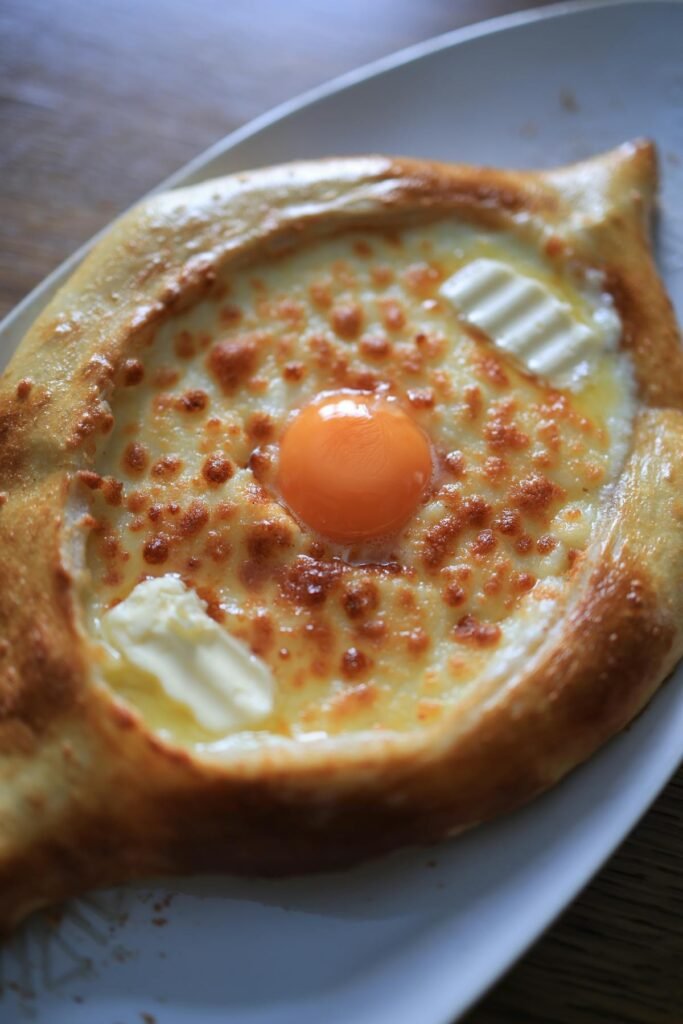
Georgia has a distinctive cheese culture, and sulguni is the most important of its cheeses. It’s a semi-soft, slightly salty, mozzarella-like cheese made from cow’s or buffalo’s milk that has been stretched and kneaded. It’s eaten fresh, smoked, fried, and baked inside bread. Khachapuri, the famous Georgian cheese bread, uses sulguni as its primary filling and is one of the country’s defining dishes.
Eating good khachapuri in Georgia is an experience in itself. The Adjarian version (Acharuli khachapuri) is a boat-shaped bread filled with melted sulguni and topped with a raw egg and butter that you stir in yourself. When made well, with fresh cheese and properly leavened bread, it’s one of the great comfort foods in any cuisine.
Badrijani Nigvzit and the Walnut-Yoghurt Tradition
One of the most distinctive elements of Georgian cooking is the combination of walnuts with garlic, spices, and sometimes yoghurt or fenugreek. Badrijani nigvzit is fried aubergine slices rolled around a walnut and garlic paste – it doesn’t contain yoghurt, but it exemplifies the Georgian approach to rich, intensely flavoured, plant-based dishes that appear across the country’s food culture.
Yoghurt-dressed salads and side dishes are common throughout Georgia, particularly in the western regions. The combination of fresh herbs, walnuts, and cultured dairy in Georgian cooking produces flavours that are complex without being heavy, and it’s one of the things that makes the cuisine genuinely distinctive rather than a variation on a familiar theme.
Where to Eat in Tbilisi
Tbilisi’s restaurant scene has expanded rapidly over the last decade and is now genuinely excellent. The old city (Narikala area) and the Marjanishvili and Vake neighbourhoods all have good restaurants at various price points. For traditional Georgian cooking, smaller family-run restaurants and wine bars in the old city tend to be more authentic than the large, tourist-facing restaurants in the main squares.
The wine culture in Georgia is equally extraordinary. Georgian amber wines, made using an ancient skin-contact method in clay amphorae called qvevri, are unlike anything produced elsewhere in the world. If you drink wine, try the local varieties (Rkatsiteli and Saperavi are the most important) at a small wine bar in Tbilisi’s old city. The combination of Georgian food and Georgian wine is, genuinely, one of the great eating experiences available in the world right now.