Labneh is yoghurt that has been strained until it becomes a soft, spreadable cheese. It’s one of the most popular foods across the Middle East and Eastern Mediterranean, eaten at every meal from breakfast to dinner, and it’s almost embarrassingly easy to make at home. If you’ve ever bought labne from a Middle Eastern grocery and wondered how it was made, the answer is: exactly like this.
The Basic Method
Line a large colander or sieve with cheesecloth (or a thin, clean tea towel). Pour in 1kg of full-fat plain yoghurt and tie the cloth around the yoghurt to form a bundle. Hang the bundle over a bowl in the fridge or set the colander over a bowl and refrigerate. The whey will drip out over the next 24-48 hours.
After 24 hours you have a very soft, spreadable labneh – similar in texture to cream cheese. After 48 hours it is firmer. After 72 hours it is firm enough to roll into balls. The longer you strain, the tangier and denser the result. Add a teaspoon of salt to the yoghurt before straining to season it and help the whey release.
Don’t discard the whey. It’s high in protein, mildly tart, and useful: add it to bread dough, soup, smoothies, or use it to soak grains before cooking. It keeps refrigerated for a week.
Fresh Labneh: Breakfast and Mezze
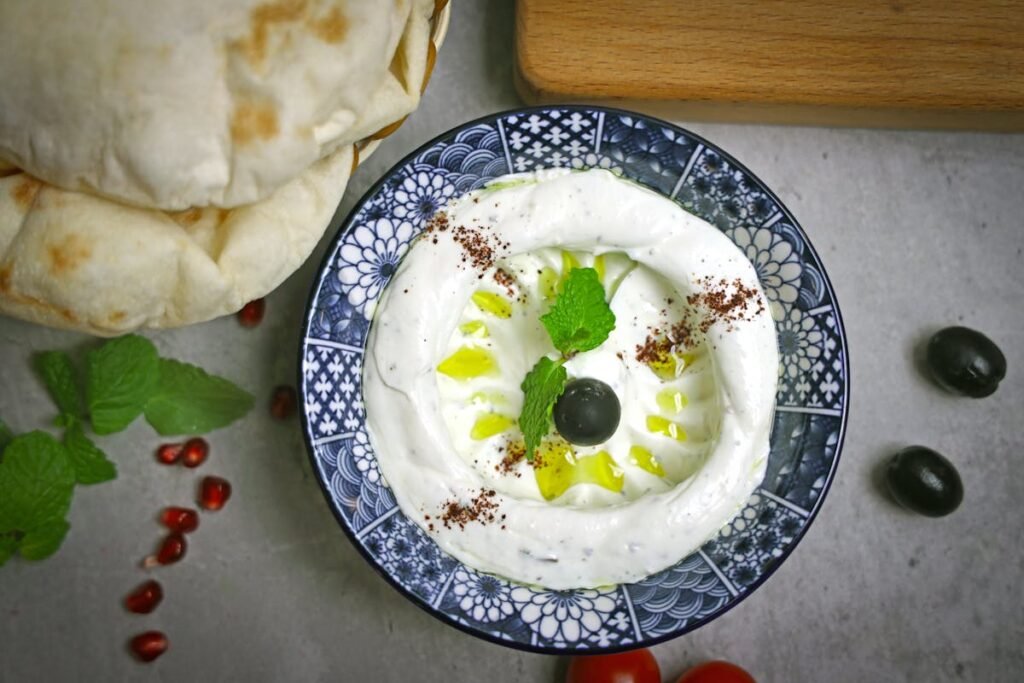
The most common way to eat fresh labneh (24-hour strain) is spread on a plate, drizzled with olive oil, and sprinkled with za’atar or dried thyme, with warm flatbread to scoop it up. This is a complete breakfast in much of the Middle East and is both simple and deeply satisfying. The combination of creamy, tangy labneh and earthy za’atar is one of the great flavour pairings in regional cuisine.
As part of a mezze spread, labneh works alongside hummus, olives, pickled vegetables, and pita. The creaminess of the labneh contrasts with the more robust flavours of the other elements and provides balance to a mezze plate.
Preserved Labneh Balls
Strain for 72 hours until firm. Roll into balls about the size of a large marble. Roll each ball in dried herbs (za’atar, dried mint, chilli flakes, or sumac) or in sesame seeds. Place in a clean glass jar and cover completely with good olive oil. Preserved this way, they keep at room temperature for up to a month or in the fridge for several months.
The olive oil absorbs the flavour of the labneh and herbs as the balls sit – by the time the jar is empty, you have herb and yoghurt-infused oil that is excellent for dressing salads or dipping bread. Nothing is wasted.
Labneh as a Cooking Ingredient
Beyond eating it as is, labneh works as: a spread for sandwiches (more flavour than cream cheese, less rich), a base for dips (blended with roasted capsicum, beetroot, or herbs), a topping for baked eggs, a stuffing for pastry with herbs and pine nuts, or dolloped over finished pasta dishes in place of ricotta. Its acidity brightens dishes and its creaminess adds body without heaviness. It’s one of the most versatile things you can have in the fridge.
Choosing Your Yoghurt
Labneh is only as good as the yoghurt you strain, so start with a full cream plain yoghurt that lists live cultures. Full-fat gives a richer, smoother cheese, while low-fat yoghurt strains into something drier and sharper. Your own homemade yoghurt works beautifully here and is the most economical route, since you are simply taking a batch a few steps further. Avoid yoghurts with added thickeners, gums, or gelatine, as these stop the whey draining cleanly.
Troubleshooting
It isn’t thickening. Give it time and a colder fridge. If the whey has stopped dripping but the labneh is still loose, the cloth may be clogged, so move it to a fresh piece. A yoghurt loaded with stabilisers will also resist straining, which is why a simple, plain yoghurt is best.
It’s too sour. The longer it strains, the tangier it gets. If you prefer a milder labneh, stop at the 24 hour mark. Starting with a fresher, milder yoghurt also keeps the sharpness down.
It’s firmer than I wanted. You have simply strained it longer than you needed. Loosen it back to a spreadable texture by stirring in a little of the reserved whey or a splash of milk.
Common Questions
How long does labneh keep? Fresh labneh keeps in a sealed container in the fridge for about a week. Rolled into balls and covered completely in olive oil, it lasts far longer, several months chilled, since the oil seals it from the air.
Can I freeze it? Fresh labneh can be frozen, though the texture loosens slightly on thawing. It is best used afterwards in cooking, stirred through warm dishes or blended into dips, rather than spread fresh.