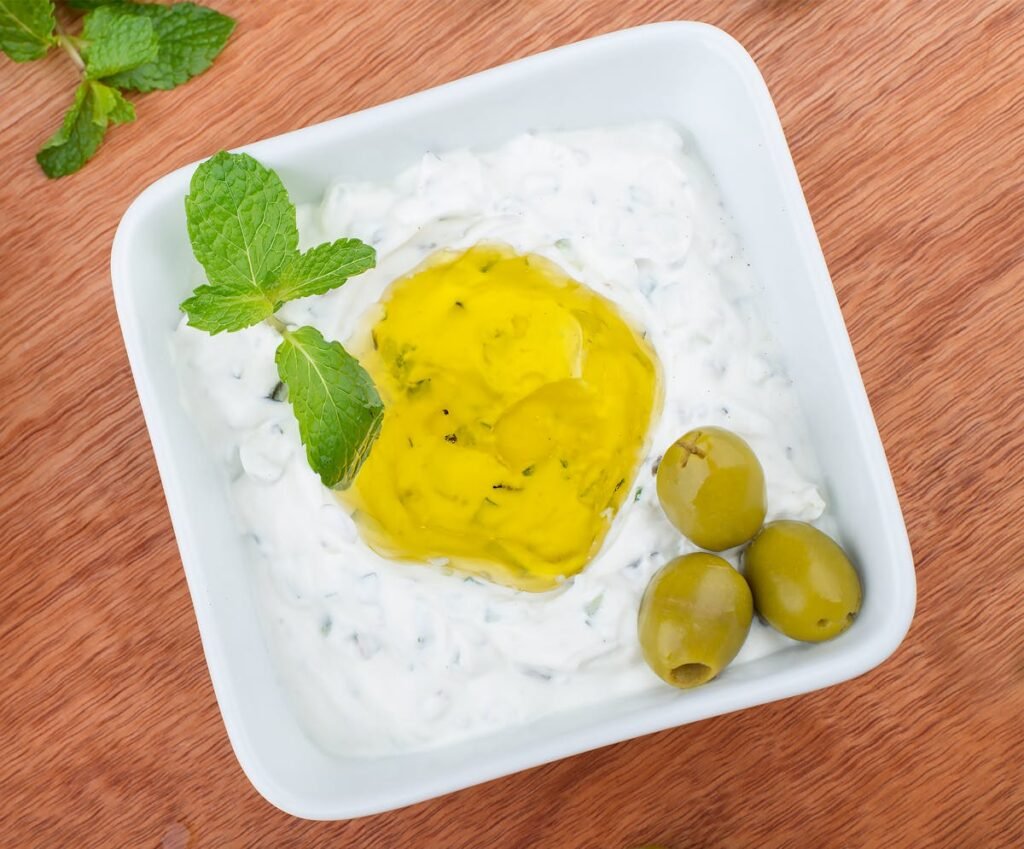
Tzatziki is one of the most useful things you can have in your fridge. It works as a dip, a sauce for grilled meat, a spread on sandwiches, a side for spiced rice dishes, and a companion to almost anything off the barbecue. The commercial versions are a pale imitation – watery, under-seasoned, with none of the depth of a properly made tzatziki. The real thing takes 10 minutes and keeps for several days.
The Ingredients
500g full-fat Greek yoghurt, 1 medium cucumber (Lebanese cucumbers are ideal), 2 garlic cloves, a small handful of fresh dill (or mint if you prefer), 1 tablespoon good olive oil, 1 tablespoon lemon juice, half a teaspoon of salt. Full-fat yoghurt is not optional here – low-fat versions are too thin and the flavour is noticeably inferior. Greek yoghurt specifically gives the thick, creamy texture that makes tzatziki what it is rather than just flavoured yoghurt.
The Method
Grate the cucumber coarsely and squeeze firmly in a clean tea towel (or squeeze with your hands over the sink) until most of the water is removed. This step is critical – skipping it produces a watery tzatziki that dilutes as it sits. You’ll be surprised how much liquid comes out of a single cucumber.
Crush or very finely mince the garlic. If you want a milder garlic flavour, use a microplane rather than a garlic press – it produces a finer paste that distributes more evenly and mellows slightly in the yoghurt. For a stronger garlic hit, use the press.
Combine the strained cucumber, garlic, yoghurt, chopped dill, olive oil, and lemon juice. Season with salt, taste, and adjust – it probably needs a little more salt than you think. Refrigerate for at least 30 minutes before serving; this allows the flavours to meld and the texture to firm up slightly. It will be noticeably better after an hour than it is fresh-made.
Serving and Storage
Drizzle with a little extra olive oil and add a sprig of dill before serving. The olive oil on the surface isn’t purely decorative – it seals the top layer slightly and prevents the surface from drying out. Serve with warm pita, raw vegetables, or alongside grilled chicken or lamb.
Stored in an airtight container in the fridge, tzatziki keeps for up to four days. It will continue to develop flavour over the first 24 hours. If it releases a little liquid as it sits, stir it back in – this is normal with yoghurt-based dips and doesn’t affect the quality.
Variations Worth Trying
Mint tzatziki: replace the dill with fresh mint. This version works particularly well with lamb. Roasted garlic tzatziki: roast a whole head of garlic until soft, squeeze out the cloves, and use those instead of raw garlic. The result is sweeter, deeper, and completely different in character – still recognisably tzatziki but more mellow and complex. Spiced tzatziki: add half a teaspoon of cumin and a pinch of smoked paprika. Good with grilled vegetables and falafel.
Troubleshooting
It’s watery. Almost always the cucumber. A single cucumber holds a surprising amount of water, and any left in will leak into the dip as it sits. Grate it, salt it lightly, leave it ten minutes, then squeeze it hard in a tea towel. Using thick Greek yoghurt rather than a runnier natural yoghurt also helps.
It’s too garlicky. Raw garlic grows stronger in the fridge over the first day, so a tzatziki that tasted balanced when made can turn fierce overnight. Use less than you think, grate it fine so it spreads evenly, or switch to roasted garlic for a gentler result.
It tastes flat. Under-seasoning is the most common fault. Tzatziki needs more salt than people expect, plus the lift of lemon. Add salt a pinch at a time, taste, and finish with enough lemon to brighten it.
Common Questions
Can I make it ahead? Yes, and it is better for it. An hour in the fridge lets the flavours settle and the texture firm up. A day ahead is fine too, just hold back a little of the garlic and stir it through fresh if you want to keep the bite in check.
Can I freeze it? Not really. Yoghurt-based dips split and weep when thawed, and the cucumber goes limp. Tzatziki is quick enough to make fresh that freezing is not worth it.
Can I use low-fat yoghurt? You can, but the result is thinner and less satisfying. If low-fat is what you have, strain it through cloth for an hour first to thicken it before you start.