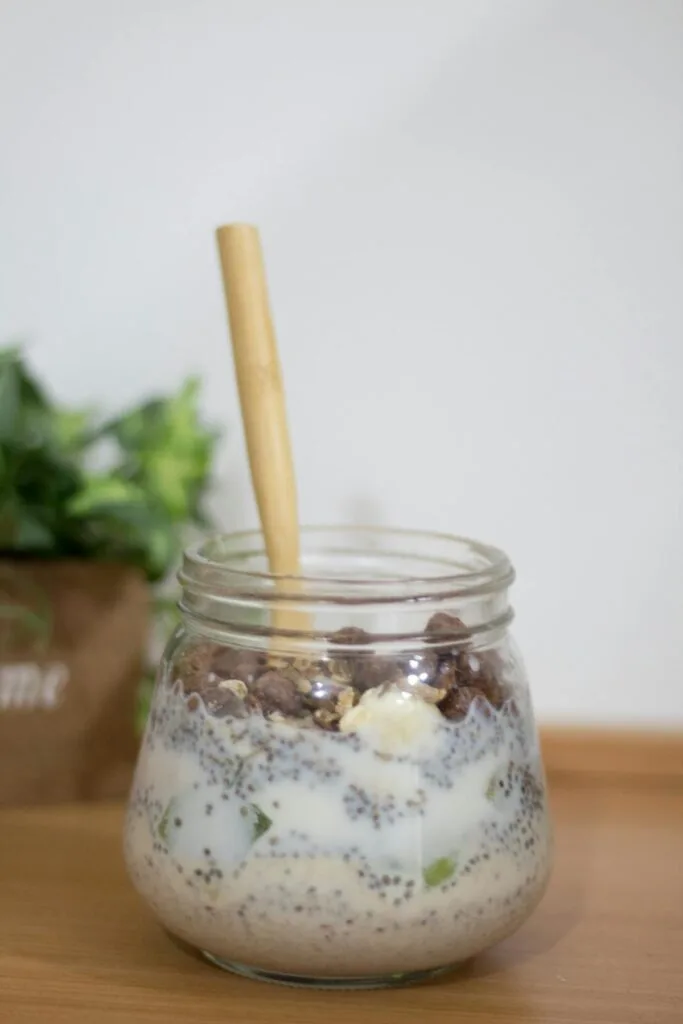
Bircher muesli predates overnight oats by about a century. It was developed by Swiss physician Maximilian Bircher-Benner around 1900 as a health food for his patients, and the original recipe was built around raw apple, oats soaked in water, lemon juice, and condensed milk. The modern version – soaked oats with yoghurt, fresh fruit, and nuts – is one of the most genuinely satisfying make-ahead breakfasts available, and substantially different from the overnight oats that have become ubiquitous on food blogs.
The Classic Version
The night before: combine 1 cup rolled oats with 1 cup apple juice (not water – the apple juice is important and distinguishes Bircher from standard overnight oats). Add half a cup of full-fat plain yoghurt, the juice of half a lemon, and 2 tablespoons of honey. Grate one large apple directly into the mixture – don’t peel it, and do it last so the apple doesn’t oxidise and turn brown while you’re preparing the rest. Stir everything together, cover, and refrigerate overnight.
In the morning: the oats will have absorbed most of the liquid and swelled considerably. The mixture will be thicker and more cohesive than overnight oats. Grate another half apple over the top for freshness. Add a handful of toasted hazelnuts or flaked almonds, some fresh berries, and a final spoonful of yoghurt. The contrast between the soft, creamy base and the fresh toppings is what makes Bircher muesli more interesting than the sum of its parts.
Why Apple Juice Matters
The apple juice does two things: it adds natural sweetness that reduces the need for additional sugar, and its natural acids interact with the oats differently from plain water, producing a slightly softer texture. Cloudy apple juice (unfiltered) has more flavour and is worth using over clear varieties. The amount of liquid you need depends on the oats – some varieties absorb more than others. If the mixture looks too dry the morning after, add a splash of milk or more yoghurt to loosen it.
Variations
Summer version: replace the apple juice with orange juice, use fresh peach or mango instead of the grated apple, and top with fresh mint and crushed pistachios. Winter version: soak in apple juice with a pinch of cinnamon and grated nutmeg, top with poached pear and toasted walnuts. High-protein version: use Greek yoghurt instead of standard yoghurt and stir in a tablespoon of almond butter before refrigerating – this version sustains energy considerably longer than the standard and is worth knowing if you have a physically active morning ahead.
Bircher keeps in the fridge for up to three days, which makes it worth making in a larger batch at the start of the week. The flavour improves after the first day as the ingredients have more time to meld. Add fresh toppings each morning rather than incorporating them into the base.
Troubleshooting
It’s too dry in the morning. Different oats and different apple juices absorb differently. Loosen it with a splash of milk or an extra spoonful of yoghurt rather than more juice, since more juice can make it too sweet.
It’s too wet or soupy. Either too much liquid went in, or the oats haven’t had long enough. Give it the full overnight rather than a rushed few hours, and if it’s still loose, stir through a few extra dry oats and let it sit another 30 minutes.
The apple went brown. Grate it last, right before the mixture goes in the fridge, and make sure it’s properly stirred through the acidic apple juice and lemon, which slows the browning.
Common Questions
Can I use water instead of apple juice? You can, but you lose the sweetness and slightly softer texture that makes Bircher different from standard overnight oats. If you do, add a little extra honey to compensate.
How far ahead can I make it? The base keeps well for three days. Add fresh toppings each morning rather than mixing them in at the start, so they stay fresh rather than going soft.