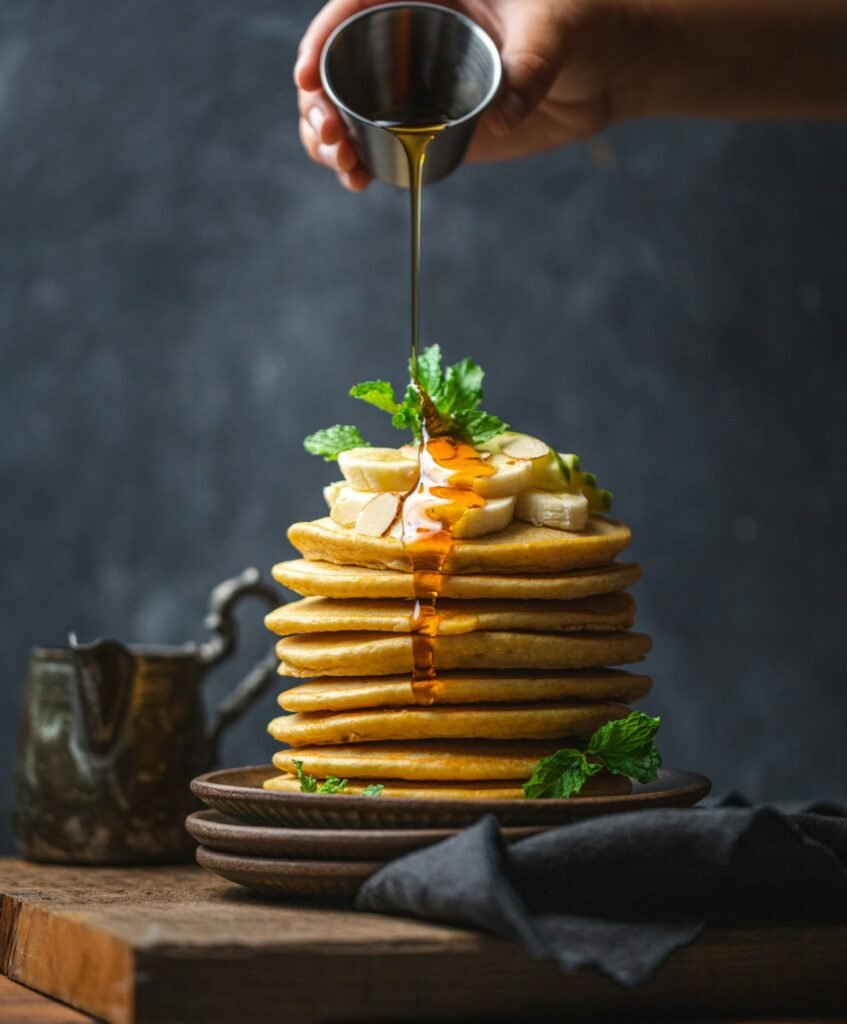
Yoghurt pancakes are better than standard milk-based pancakes. The lactic acid in yoghurt activates with bicarbonate of soda to create a more vigorous rise, and the result is thicker, fluffier pancakes with a slight tang that makes them taste more interesting than the usual flat version. Pairing them with lemon curd turns breakfast into something worth getting up for.
The Pancake Batter
In a large bowl, whisk together: 1 cup plain full-fat yoghurt, 2 eggs, 2 tablespoons melted butter, and 1 tablespoon honey. In a separate bowl, combine: 1 cup plain flour, 1 teaspoon baking powder, half a teaspoon bicarbonate of soda, and a pinch of salt. Make a well in the dry ingredients and pour in the wet, folding gently until just combined. Lumps are fine – overmixing develops the gluten and makes pancakes tough. Rest the batter for 5 minutes while the pan heats.
Cook in a medium-hot non-stick pan with a small amount of butter. Pour about a quarter of a cup of batter per pancake and cook until bubbles form on the surface and the edges look set (around 2 minutes), then flip and cook for 90 seconds more. These pancakes don’t need oil between batches if you start with a well-seasoned pan – the butter in the batter is enough.
The Lemon Curd
A quick lemon curd can be made in 10 minutes: combine 3 egg yolks, half a cup of caster sugar, the juice and zest of 2 lemons, and 60g of cold butter (cut into cubes) in a small saucepan. Cook over low heat, stirring constantly, until the mixture thickens enough to coat the back of a spoon (about 8-10 minutes). Do not let it boil. Remove from heat and pour through a fine sieve into a jar. It will thicken further as it cools.
Lemon curd keeps in the fridge for 2 weeks, so you can make it ahead. A good-quality store-bought lemon curd works fine if you’d prefer to skip that step – the quality difference is noticeable but not dramatic.
Assembly
Stack the pancakes, spoon lemon curd generously over the top, and add a dollop of plain yoghurt alongside. A handful of fresh blueberries or raspberries adds colour and an acidic counterpoint to the richness of the curd. A dusting of icing sugar if you’re feeding people – it photographs well and signals that this is a special breakfast without any additional effort.
The yoghurt alongside the lemon curd is important: it tempers the richness and adds a cooler, lighter element. Without it, the combination can feel quite heavy. With it, the dish balances beautifully between rich, sharp, light, and creamy.
For Weekdays
The batter keeps overnight in the fridge – make it on Sunday evening and pour directly from the bowl into the pan on Monday morning. The pancakes themselves also reheat well: 30 seconds per side in a dry pan or 30 seconds in a microwave. This is a weekend recipe that can be stretched into the working week without much effort.
Troubleshooting
They came out flat. Check your baking powder and bicarbonate of soda are fresh, since both weaken over time. Also make sure the pan isn’t too hot, which sets the outside before the raising agents have had time to work.
They’re tough or rubbery. The batter was overmixed. Fold just until the flour disappears and stop, lumps and all. Overworking the batter develops the gluten and toughens the crumb.
The lemon curd split or looks curdled. The heat was too high. Keep it low and stir constantly, and take it off the heat the moment it coats the back of a spoon rather than waiting for it to thicken further in the pan, since it keeps thickening as it cools.
Common Questions
Can I use Greek yoghurt instead of regular? Yes, it makes a slightly thicker, richer pancake. Thin the batter with a splash of milk if it feels too heavy to pour.
Can I freeze the pancakes? Yes, cool them fully, layer with baking paper, and freeze. Reheat in a dry pan or a toaster rather than the microwave, which keeps them from going soft.